
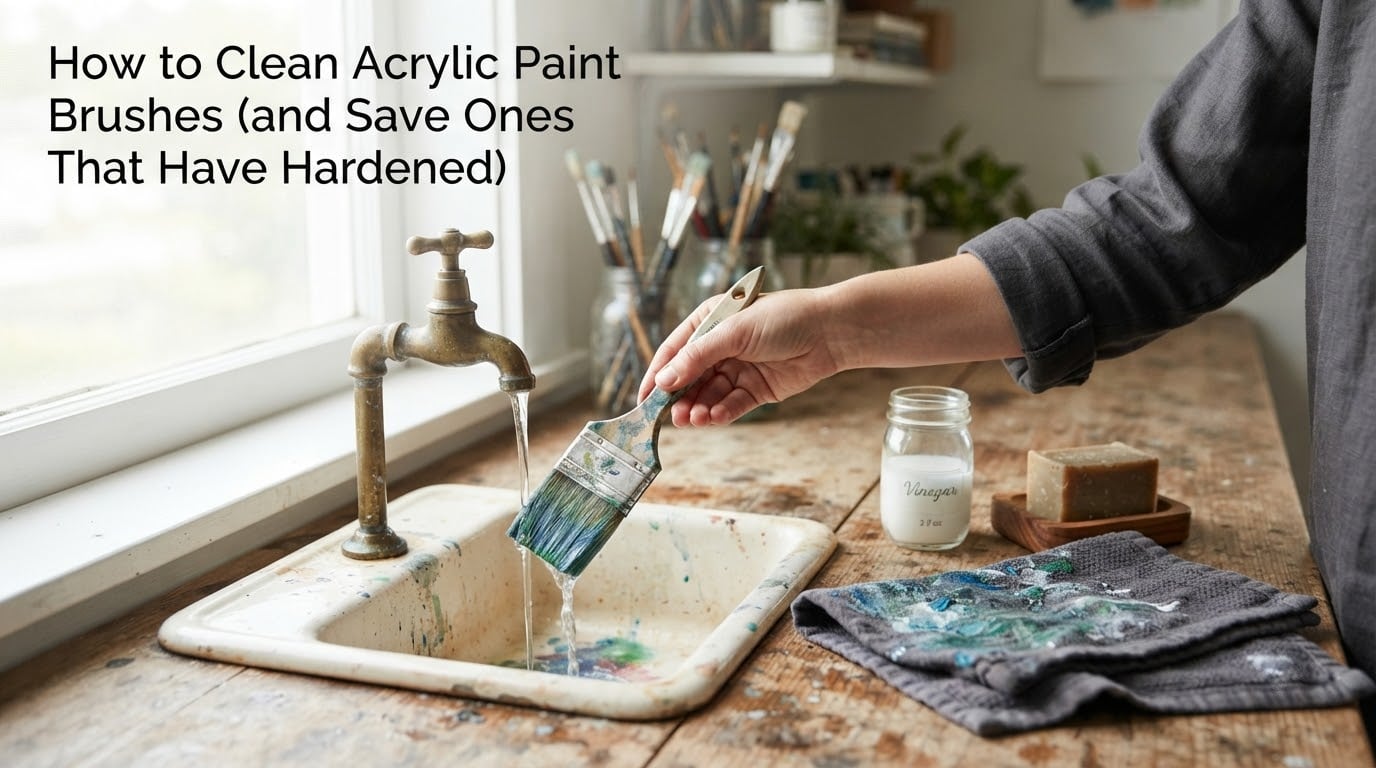
If you have ever set a brush down “just for a minute” and come back to a stub of bristles glued together by dried acrylic, you are not alone. Almost every painter has ruined a favorite brush at least once, and most of us have a jar in the studio filled with stiff, forgotten tools we assumed were done for. The good news: learning how to clean acrylic paint brushes properly, and how to rescue hardened ones, is one of the easiest upgrades you can make to your art practice.
I have been there, staring at a $12 round brush with the bristles fused into a plastic spike. After a few years of trial, error, and a lot of vinegar, I want to share the routines that actually work, the warnings that protect your brushes from real damage, and the honest truth about when a brush is past saving. This guide covers both routine care and rescue work for hardened acrylic paint brushes, plus storage tips so you spend less time cleaning and more time painting.
Table of Contents
- Quick Answer: How to Save a Hardened Acrylic Paint Brush
- How to Clean Acrylic Paint Brushes While the Paint Is Still Wet
- How to Remove Dried and Hardened Acrylic Paint From Brushes
- Tools and Supplies for Cleaning Acrylic Paint Brushes
- How to Dry, Reshape, and Store Acrylic Paint Brushes
- Prevention Tips: Cleaning as You Paint
- When to Save a Brush and When to Let It Go
- Frequently Asked Questions
- Conclusion
Quick Answer: How to Save a Hardened Acrylic Paint Brush
Soak the hardened brush in warm white vinegar for 30 minutes to 1 hour. After the soak, work the bristles gently with your fingers or a brush comb under warm running water. The dried acrylic should soften and release. For paint set deep in the ferrule (the metal band that holds the bristles), follow the vinegar soak with a brush cleaner solution or rubbing alcohol.
This rescue method works for brushes that have been left for a few hours or even a couple of days. For brushes that have hardened for weeks or months, the success rate drops, but it is still worth trying before you throw them out.
How to Clean Acrylic Paint Brushes While the Paint Is Still Wet
Wet acrylic is forgiving. With a quick rinse and a little soap, you can have a brush clean and ready to use again in under two minutes. I treat this as a non-negotiable part of finishing a painting session. Here is the routine I run through whenever I set a brush down.
Step 1: Wipe Off Excess Paint First
Before any brush touches water, wipe it on a paper towel or a rag until most of the paint is gone. Squeeze the bristles from ferrule to tip with the towel, working the paint out rather than down toward the metal band. This single habit saves your brushes more than any cleaning product.
Step 2: Rinse in Warm Water
Hold the brush under a gentle stream of warm water, again working from ferrule to tip. Never soak a brush standing upright in a jar of water, because water creeping up into the ferrule will loosen the glue and the bristles will shed forever.
Step 3: Add a Mild Soap
Put a drop of mild liquid soap or hand soap in the palm of your hand. Gently swirl the wet brush in the soap, working it into a light lather. For tougher colors or thicker paint, repeat with another drop. Dish soap works well because it cuts acrylic binders effectively.
Step 4: Rinse and Repeat
Rinse thoroughly under warm water until the water runs clear. Reshape the bristles with your fingers and check the ferrule. If you see any color leaking out, repeat the soap step.
Step 5: Reshape and Dry Flat
Gently reshape the bristles back into their original form. Lay it flat on a clean towel to dry, or hang it bristle-side down in a brush holder. Never store a wet brush in a closed container, since that is the fastest path to mildew and a ruined ferrule.
How to Remove Dried and Hardened Acrylic Paint From Brushes
If the paint has dried, you need a stronger approach. The trick is softening the paint film before you try to scrub it out, because prying at hardened acrylic just breaks bristles. These three methods are the ones I trust, ordered from least aggressive to most aggressive.
Method 1: The Vinegar Soak (Best for Slightly Dried Brushes)
White vinegar is a gentle acid that softens dried acrylic without harming most bristles. Pour enough warm white vinegar into a small cup to cover the bristles, and soak the brush for 30 minutes to 1 hour. After soaking, work the bristles between your fingers and rinse under warm water. Repeat the soak for stubborn spots.
One important note: vinegar is safe for both synthetic and natural hair brushes, but a long soak (over 2 hours) can make natural bristles brittle. Stick to an hour or less, and follow up with a brush conditioner if your brushes are natural hair.
Method 2: Rubbing Alcohol (For Stubborn Dried Paint)
Isopropyl alcohol at 90 percent concentration dissolves dried acrylic faster than vinegar, but it is harsher on bristles. Dip the brush in rubbing alcohol for 1 to 2 minutes, then work the bristles against the bottom of a small dish to loosen paint. Rinse thoroughly and repeat if needed. Always follow an alcohol soak with a brush conditioner, especially on natural hair brushes.
Method 3: Commercial Brush Cleaner
Specialized brush cleaners and conditioners, like the kind made for artists, are formulated to break down dried acrylic while conditioning the bristles. These are my go-to for high-quality brushes because they balance cleaning power with bristle care. Apply a small amount to the bristles, work it in, and rinse as directed on the product label.
Method 4: The Acetone Question
Acetone and nail polish remover will dissolve acrylic fast, but I do not recommend them for brushes. Acetone dries out natural hair, weakens the glue in the ferrule, and can melt some synthetic bristle types. Reserve acetone for cleanup of hard surfaces, not for brush rescue.
Tools and Supplies for Cleaning Acrylic Paint Brushes
You do not need much, but having the right supplies on hand makes the difference between a clean brush and a ruined one. Here is what I keep in my cleaning kit.
Basic Supplies
A small cup or jar for soaking, paper towels or a cleaning rag, mild liquid soap, white vinegar, and access to warm running water. That covers 90 percent of routine cleaning.
Optional but Useful
A brush comb or cleaning pad helps work paint out of the ferrule without bending bristles. A dedicated brush washer (a lidded jar with a screen insert) is wonderful for studio work, because it lets you rinse without dirtying your sink. Brush conditioner is worth using on natural hair brushes after any deep clean.
Synthetic vs Natural Bristles: What to Know
Synthetic brushes (nylon, taklon, polyester) handle water-based acrylic beautifully and tolerate vinegar and rubbing alcohol well. They are also the most common choice for acrylic painting. Natural hair brushes (sable, goat, hog) are softer and more delicate, and they absorb water and solvents into the bristle core, so they need gentler handling and always a conditioner after deep cleaning.
How to Dry, Reshape, and Store Acrylic Paint Brushes
Cleaning is half the job. How you dry and store your brushes determines whether they will be ready for next session or already on their way to becoming a hardened stub again.
Drying the Right Way
After cleaning, gently reshape the bristles with your fingers and lay the brush flat on a towel, or place it bristle-side down in a ventilated brush holder. Air circulation is key. Drying a brush flat on a counter for several hours is perfectly fine, and many artists prefer this because it avoids any stress on the ferrule.
Short-Term Storage During a Painting Session
If you are stepping away from your palette for a few minutes, wipe the brush and either rest it on the edge of your palette or stand it bristle-up in a jar with the bristles free. Never leave a brush sitting in a puddle of water or solvent, because that wicks directly into the ferrule and ruins the glue.
Long-Term Storage
Once a brush is fully dry, store it flat in a drawer or upright in a brush cup with the bristles up. Avoid storing brushes in airtight containers while damp, since trapped moisture causes mildew and rust on the ferrule. If you use brush sleeves or covers, make sure the brush is completely dry first.
Prevention Tips: Cleaning as You Paint
Rescue methods are great, but prevention is easier. These are the in-session habits that keep brushes soft and ready.
Keep a damp rag or paper towel at your palette and wipe the brush every few minutes, especially during long blending sessions. Switch to a fresh brush when the one in your hand starts to drag or feel stiff. Have two jars of water: one for rinsing, one for final rinse. And every 20 to 30 minutes, give your active brush a quick soap-and-water clean before the paint dries hard.
When to Save a Brush and When to Let It Go
Not every hardened brush can be brought back. After cleaning, run these quick checks to decide whether to keep it or compost it.
- Bristles spring back when wet: keep it.
- Ferrule is tight with no rust, and the glue is intact: keep it.
- Bristles stay bent or splay out when wet: retire it for rough work or recycle.
- Paint is permanently cemented inside the ferrule, or the ferrule is rusted or loose: replace it.
I keep “retired” brushes for dry brushing, applying gesso, or texture work, where the bristles do not need to be precise. A brush that is past its prime for detail painting still has plenty of life as a utility tool.
Frequently Asked Questions
How do you soften hardened acrylic paint brushes?
Soak the brush in warm white vinegar for 30 to 60 minutes. Then work the bristles gently with your fingers or a brush comb under warm running water to release the softened paint.
What dissolves dried acrylic paint from a brush?
White vinegar softens slightly dried acrylic, rubbing alcohol breaks down stubborn dried paint, and commercial brush cleaners dissolve the toughest buildup. Soak first, then rinse and condition.
Can you use rubbing alcohol on acrylic paint brushes?
Yes, but use it sparingly. Dip the brush in 90 percent isopropyl alcohol for 1 to 2 minutes, work the bristles loose, and rinse thoroughly. Follow up with a brush conditioner, especially on natural hair brushes.
How long should you soak a brush in vinegar?
Soak for 30 minutes to 1 hour. Longer than 2 hours can make natural hair bristles brittle and may damage the glue holding the bristles in the ferrule.
Can hardened acrylic paint brushes be saved?
Most can. Soak in warm vinegar for 30 to 60 minutes, work the bristles loose with your fingers, rinse, and condition. Brushes hardened for weeks may need a commercial cleaner and might not fully recover, but the attempt is worth it before replacing.
Conclusion
Cleaning acrylic paint brushes is less about fancy products and more about consistent habits. Wipe and rinse before paint dries, store brushes dry and shaped, and reach for vinegar or rubbing alcohol the moment a brush stiffens up. If you remember nothing else, remember the trio that saves most brushes: warm water, mild soap, and a vinegar soak.
Next time you sit down to paint, set a small timer for 20 minutes and give every active brush a quick rinse. That single habit, more than any product or method, will keep your brushes soft, your colors clean, and your wallet happy. Happy painting.