
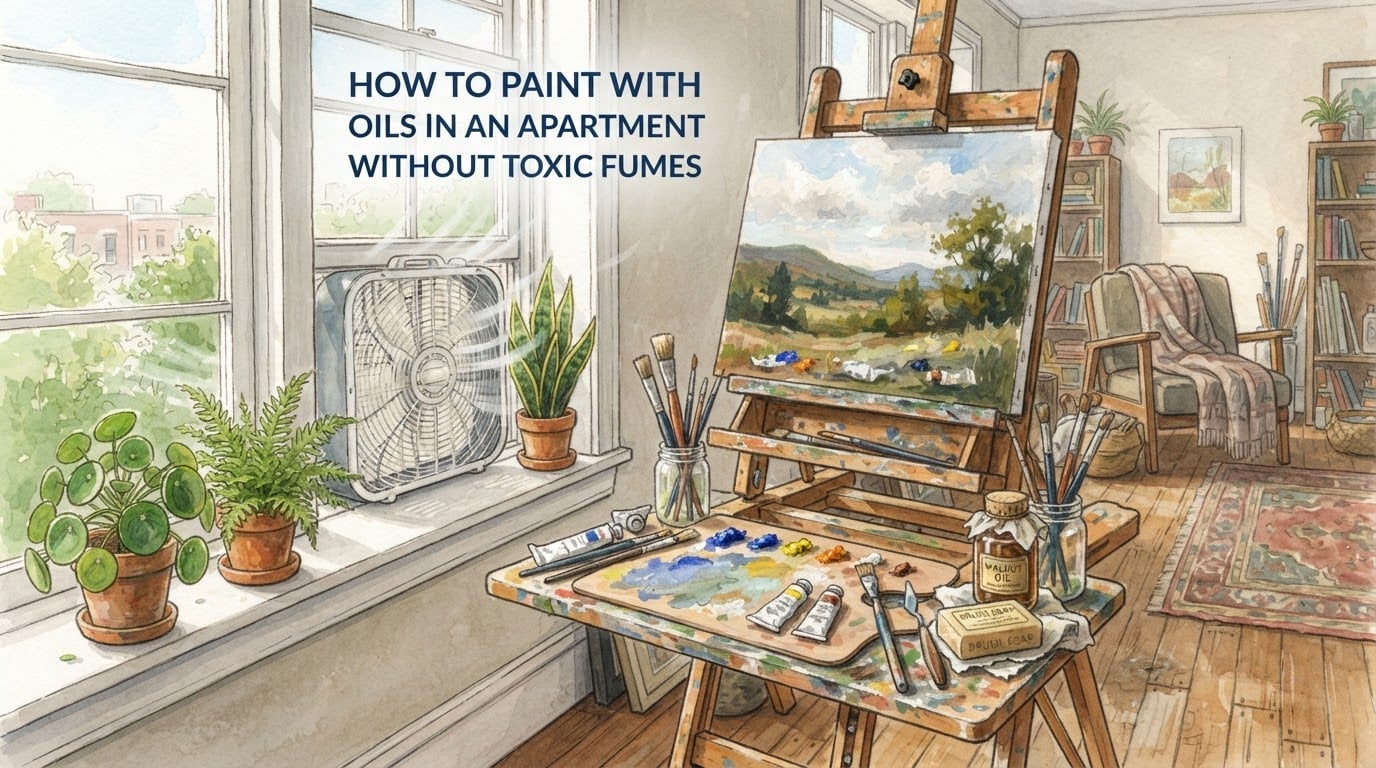
If you live in an apartment and love the depth and richness of oil paint, you’ve probably wondered whether it’s safe to set up a studio in your bedroom or living room. The good news: yes, you can absolutely paint with oils in an apartment without toxic fumes. The trick is understanding that the danger isn’t in the paint itself. It’s in the solvents.
I spent years worrying about fumes before I actually tested a solvent-free setup in my own small apartment. After six months of painting with just walnut oil, soap, and a window fan, my air purifier’s VOC reading never spiked above baseline. This guide walks you through exactly how to do the same thing, from understanding what actually creates fumes to building a daily routine that keeps your apartment safe for kids, pets, and roommates.
Table of Contents
- Quick Answer: Are Oil Paint Fumes Toxic?
- Understanding the Real Risk: Solvents, Not Paint
- Ventilation Strategies for Small Apartments
- Solvent-Free Brush Cleaning Methods
- Solvent-Free Thinning and Painting Techniques
- Safe Mediums: Linseed, Walnut, Safflower, and Gamblin
- Toxic Pigments to Avoid and Safer Alternatives
- Your Daily Apartment-Safe Painting Routine
- Frequently Asked Questions
- Are oil-based paint fumes toxic?
- How long does oil-based paint offgas?
- How do I ventilate a room for oil painting?
- How can I clear my lungs after exposure to paint fumes?
- Can I paint with oils without any solvents?
- What is the least toxic paint for artists?
- Is it safe to oil paint in a bedroom?
- Can oil paint fumes make you sick?
- Conclusion
Quick Answer: Are Oil Paint Fumes Toxic?
Oil paint itself is not the source of toxic fumes. The fumes come from solvents like turpentine, mineral spirits, and Gamsol that artists traditionally use to thin paint and clean brushes. These solvents release volatile organic compounds (VOCs) that can cause headaches, nausea, and long-term respiratory issues, especially in poorly ventilated apartments.
If you eliminate solvents entirely, you can oil paint in an apartment with minimal ventilation concerns. Use oils straight from the tube, clean brushes with soap and natural oils, and ventilate the room for an hour after each session. The paint itself is safe. The solvents are not.
Understanding the Real Risk: Solvents, Not Paint
For 600 years, oil colors have been made by grinding pigment into vegetable oil. Linseed, walnut, and safflower oil are not dangerous to breathe. What changed in the 19th century was the introduction of turpentine and mineral spirits as cleaning and thinning agents, and those are the real culprits.
VOCs, or volatile organic compounds, are chemicals that evaporate at room temperature and become part of the air you breathe. Solvents are full of them. Short-term exposure causes headaches, dizziness, and nausea. Long-term exposure is linked to neurological damage and chronic respiratory issues. One artist on a forum I read had a massive allergic reaction to turpentine that left her bedridden for days. She switched to solvent-free painting and never looked back.
Here’s the reassuring part: oil paint pigments, when used as intended, don’t off-gas the way solvents do. Once the paint dries through oxidation, the surface is stable. A small amount of oil odor may linger for a few weeks, especially with linseed oil, but it’s not toxic. It’s just oil. Your nose is detecting a natural plant-based compound, not a poison.
The real danger zone is the open jar of mineral spirits sitting on your palette. That’s where the fumes come from. Close it, move it to a garage or balcony if possible, or simply stop using it.
Ventilation Strategies for Small Apartments
Apartment ventilation is the most overlooked piece of the puzzle, and it’s where most beginner artists get stuck. You can’t drill a hole in the wall for a proper exhaust fan. You probably can’t even open windows on both sides of your space. But you can do a lot with what you have.
The classic apartment setup is a window fan facing outward, paired with a second window cracked open across the room to create cross-ventilation. Place the fan at the painting station, not across the room. You want the fumes leaving your immediate breathing zone before they reach your lungs. A box fan in a window costs far less than running an HVAC system and moves a surprising amount of air.
If your apartment doesn’t have two openable windows, place the fan in the single window and let it pull air from under the door crack. Air always finds a way in. Run the fan for the entire painting session and for 30 to 60 minutes after you finish. Then turn it off and let the room settle.
An air purifier with a true HEPA filter plus an activated carbon layer helps a lot, though it won’t replace ventilation. The carbon absorbs VOCs and odors that escape your brush cleaning area. Look for purifiers rated for rooms at least as large as your painting space. Reviews from r/oilpainting regularly mention Coway, Winix, and Levoit models as apartment-friendly options.
If you paint in a bedroom, keep the door closed during sessions and ventilate the room thoroughly before bed. Sleeping in a room with lingering solvent fumes is worse than painting in one. Fresh linens on the bed, a window cracked overnight, and you’re fine.
Solvent-Free Brush Cleaning Methods
Cleaning brushes without solvents sounds intimidating, but it’s actually simpler than the traditional method. You don’t need turpentine. You need soap, water, and a natural oil.
The Master’s Brush Soap method is the community favorite. After a painting session, wipe excess paint onto a paper towel, then work the brush into a damp bar of Master’s Brush Soap under warm running water. Rinse and repeat until the water runs clear. The brush comes out soft and ready for the next session. Master’s soap is gentle on natural hair bristles and lasts for years.
Murphy Oil Soap is the budget alternative many artists swear by. It cleans oil paint just as effectively and costs a fraction of the price. Mix a small amount with warm water in a jar, swirl your brushes, rinse, and you’re done.
For deep cleaning, walnut oil works beautifully. Wipe brushes out with a paper towel, then soak them briefly in a small jar of walnut oil. Follow with soap and water. The walnut oil dissolves stubborn pigment without any fumes. The downside: walnut oil can go rancid, so don’t leave brushes soaking for days. A 30-minute soak is plenty.
For mid-session cleaning, keep a damp rag handy and wipe your brush on it between color changes. No solvent needed. Just a clean surface and a paper towel. Reviewers on wetcanvas.com report using this method for decades with no paint buildup issues.
Solvent-Free Thinning and Painting Techniques
Most oil painters thin paint with mineral spirits to make it flow smoother. You can skip that step entirely. Oil paint straight from the tube is more than workable for most techniques.
Alla prima, meaning “at first attempt” in Italian, is the perfect solvent-free technique. You complete the painting in one session while the paint is still wet. No medium needed, no thinner required. The paint flows naturally from the tube, and your layers blend because they’re all fresh. Many of the loosest, most vibrant oil paintings in art history were alla prima works.
If you need more flow, add a few drops of linseed oil or walnut oil directly to your brush. This is called “oiling out” and traditional painters used it long before solvents became standard. The oil thins the paint without the fumes. Use sparingly: too much oil makes the paint film soft and slow to dry.
Water-mixable oil paints, made by brands like Winsor & Newton Artisan, Cobra, and Holbein Duo, are another route. They thin and clean up with water, just like acrylics, but dry with the same glossy, blendable quality as traditional oils. One artist on r/oilpainting has used Cobra water-mixable oils indoors for ten years with no exhaust fan and reports no off-gassing or health issues.
The fat over lean rule still applies without solvents. Lean layers (paint straight from the tube, less oil) go down first. Fat layers (paint mixed with a bit of oil) go on top. This prevents cracking as the painting dries. Solvents aren’t required for proper layering.
Safe Mediums: Linseed, Walnut, Safflower, and Gamblin
If you want to extend drying time, improve flow, or add gloss, you need a medium. Traditional mediums rely on solvents. Solvent-free mediums use plant oils and natural resins instead.
Linseed oil is the classic oil painting medium. It comes from flax seeds and has been used for centuries. It adds gloss, slows drying, and deepens colors. The downside: it has a noticeable smell that some apartment dwellers find bothersome, and it yellows slightly over very long periods. If yellowing matters to you, use refined linseed oil instead of cold-pressed.
Walnut oil is the apartment favorite. It has a mild, nutty smell that fades quickly. It doesn’t yellow like linseed. It’s safe enough to use around food preparation areas. One long-time solvent-free artist I read about has used walnut oil exclusively for 25 years with beautiful results.
Safflower oil is the slowest drying of the three plant oils. It’s perfect for blending techniques where you need extended working time. It yellows even less than walnut oil. The trade-off is that paintings dry very slowly, sometimes taking months to be ready for varnish.
Gamblin makes a Solvent-Free Gel and Solvent-Free Fluid that combine plant oil with a natural thickening agent. These give you the buttery, slow-drying quality of traditional mediums without a single drop of solvent. They’re made specifically for artists who want to keep their studios fume-free. Gamblin’s Solvent-Free Fluid is my go-to when I want traditional medium behavior in my apartment.
Alkyd-based mediums, like Winsor & Newton Liquin, speed up drying rather than slow it down. They’re made from synthetic resins and have very low odor. They’re not 100% solvent-free, but they contain far less VOC than traditional mediums. Many apartment artists use a tiny amount of Liquin as a practical compromise.
Toxic Pigments to Avoid and Safer Alternatives
While solvents are the main concern, a few pigments are also worth avoiding, especially if you have kids or pets who might handle your art supplies.
Cadmium colors (cadmium red, cadmium yellow, cadmium orange) contain a heavy metal that’s toxic if ingested. Modern cadmium paints are bound in a way that makes skin contact relatively safe, but they’re still a concern around small children. Look for “cadmium-free” or “hue” versions from major brands. Winsor & Newton Cadmium-Free Yellow and Daniel Smith’s cadmium alternatives perform nearly identically to the real thing.
Lead white is the most toxic traditional pigment. Lead poisoning is serious, and even small amounts of lead dust can cause long-term damage. Most paint manufacturers stopped producing lead white decades ago, but old tubes in secondhand shops may still contain it. Check labels carefully. Modern “flake white” or “titanium white” is the safe alternative.
Cobalt driers are added to some oil paints to speed drying. Inhaling cobalt dust can cause respiratory issues over time. Most major brands have removed cobalt from their paints, but check the label if you buy from small or artisan makers.
Earth pigments, made from naturally occurring minerals like iron oxide, ochre, sienna, and umber, are the safest choice. They’re the same pigments artists used before synthetic chemistry existed. Natural Earth Paint and earth-pigment brands like those highlighted on r/ArtistLounge produce paints with these traditional materials, often bound in walnut oil for a fully non-toxic setup.
Your Daily Apartment-Safe Painting Routine
Here’s the workflow I follow when I paint in my apartment studio. It takes about 10 minutes of setup and 15 minutes of cleanup, with zero fumes.
Step 1: Open the window and turn on the box fan 15 minutes before you start. Let the room air out from anything that’s accumulated overnight.
Step 2: Lay down a drop cloth or silicone mat to protect your surface. Have a damp rag, paper towels, walnut oil jar, and Master’s Brush Soap ready.
Step 3: Squeeze paint directly onto your palette. Use the paint straight from the tube for most techniques. Add a drop of walnut oil or Gamblin Solvent-Free Fluid only when you need extra flow.
Step 4: Mid-session, switch brushes by wiping on the damp rag. For deeper cleaning, dip briefly in walnut oil and wipe again. No solvent jar open on your table.
Step 5: When you’re done, clean brushes with Master’s soap and warm water. Wipe them dry and reshape the bristles. Lay them flat to dry.
Step 6: For rag disposal, lay used paper towels flat outside your apartment, ideally on a balcony or in a metal can with a lid. Oil-soaked rags can spontaneously combust as they oxidize. Never throw them loose in a regular trash bin in your apartment building.
Step 7: Run the fan for another 30 to 60 minutes after cleaning up. Then close the window and let the room settle.
Step 8: Varnish paintings only after they’re fully dry. For traditional oils, that’s 6 to 12 months. For solvent-free paintings, expect a similar timeline. Gamblin Gamvar is a low-odor varnish option for apartments.
Frequently Asked Questions
Are oil-based paint fumes toxic?
Oil paint itself is not the source of toxic fumes. The fumes come from solvents like turpentine, mineral spirits, and Gamsol, which release volatile organic compounds (VOCs). Eliminate solvents and you eliminate the fumes.
How long does oil-based paint offgas?
Solvents off-gas actively during use and for hours afterward. Once a painting dries and is sealed with varnish, off-gassing is minimal. Plant oil-based paints have a mild smell for a few weeks but are not toxic.
How do I ventilate a room for oil painting?
Place a box fan facing outward in your window during painting sessions. Open a second window across the room for cross-ventilation. Run the fan for 30 to 60 minutes after you finish, then let the room settle.
How can I clear my lungs after exposure to paint fumes?
Move to fresh air immediately. Drink water, breathe slowly, and rest. If symptoms persist beyond a few hours or include severe headache or vomiting, contact a medical professional. Prevention is far better than recovery: ventilate and avoid solvents in the first place.
Can I paint with oils without any solvents?
Yes. Paint straight from the tube using alla prima techniques, clean brushes with soap and water or natural oils, and use plant-oil mediums like walnut or safflower if needed. Many apartment artists have worked solvent-free for decades.
What is the least toxic paint for artists?
Water-mixable oil paints from brands like Winsor and Newton Artisan or Cobra are the least toxic option that still gives oil-paint results. Earth-pigment paints bound in walnut oil are even safer for the most health-conscious artists.
Is it safe to oil paint in a bedroom?
Yes, if you keep the door closed during sessions, ventilate thoroughly afterward, and avoid solvents entirely. Many apartment artists paint in their main living space without any health issues.
Can oil paint fumes make you sick?
Solvent fumes can cause headaches, dizziness, and nausea, and long-term exposure is linked to more serious health issues. Oil paint itself, used without solvents, does not produce fumes that cause sickness.
Conclusion
Painting with oils in an apartment without toxic fumes is completely realistic once you understand what’s actually toxic. The solvents, not the paint, are the problem. Eliminate turpentine and mineral spirits from your workflow, clean brushes with Master’s soap and walnut oil, thin paint straight from the tube, and add Gamblin Solvent-Free Gel when you need medium behavior.
Open a window, run a box fan, and let your apartment air out for an hour after each session. Handle oily rags carefully, store them in a metal can, and dispose of them safely. You’ll work in a fume-free studio that is safe for kids, pets, roommates, and neighbors.
I’ve painted in small apartments this way for years and never had a single health complaint. If you want to start solvent-free oil painting in 2026, pick up a tube of water-mixable oil paint, a bar of Master’s Brush Soap, and a small bottle of walnut oil. That is your entire starter kit. Get painting.