
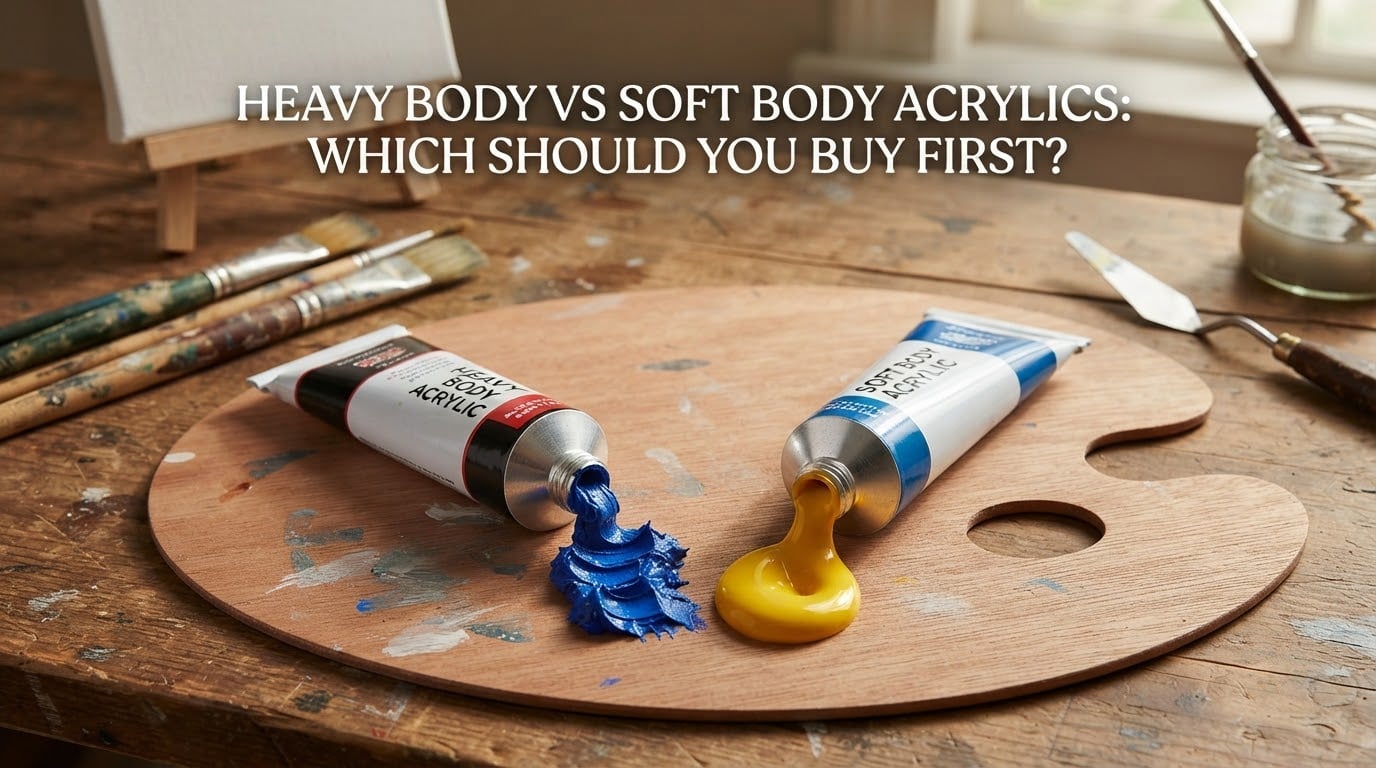
If you’re standing in the acrylic paint aisle wondering which type to buy, you’re not alone. Heavy body vs soft body acrylics is one of the most common questions beginners face when starting their painting journey. The short answer: choose heavy body acrylics if you want textured, brush-stroke-visible paintings, or pick soft body acrylics if you prefer smooth, flowing work with subtle detail.
Both types contain the same pigment and dry to the same permanent finish. The real difference lies in viscosity—how thick or thin the paint flows from the tube. That single characteristic affects everything from which techniques work best to how your final painting looks.
In this guide, I’ll break down exactly what each type offers, when to use them, and which one you should buy first as a beginner. By the end, you’ll have a clear answer tailored to your painting style.
Table of Contents
- Quick Answer: Heavy Body vs Soft Body Acrylics
- What Is Heavy Body Acrylic Paint?
- What Is Soft Body Acrylic Paint?
- Key Differences Between Heavy Body and Soft Body Acrylics
- When to Choose Heavy Body Acrylics
- When to Choose Soft Body Acrylics
- Can You Mix Heavy Body and Soft Body Acrylics?
- Which Should You Buy First?
- Frequently Asked Questions
- When should I use heavy body acrylic paint?
- What are soft body acrylics good for?
- What is the difference between soft body acrylic and heavy body acrylic?
- Can you mix heavy body acrylic paint with soft body acrylic paint?
- When to use soft body acrylic paint?
- Do heavy body acrylics dry slower than soft body acrylics?
- Conclusion
Quick Answer: Heavy Body vs Soft Body Acrylics
Here’s the direct comparison most artists need when choosing between these two paint types:
| Feature | Heavy Body Acrylics | Soft Body Acrylics |
|---|---|---|
| Viscosity | Thick, butter-like consistency | Creamy, flows like heavy cream |
| Texture | Retains brush strokes, holds peaks | Smooth, self-leveling |
| Best For | Impasto, textured paintings, bold strokes | Glazing, detail work, smooth coverage |
| Brush Strokes | Highly visible, intentional texture | Minimal visibility, even finish |
| Drying Time | Slightly longer (thicker paint layer) | Slightly faster (thinner application) |
| Coverage | Excellent, opaque in fewer layers | Good, may need more layers for opacity |
| Pigment Load | High pigment concentration | High pigment concentration |
| Best Techniques | Impasto, palette knife work, expressive | Glazing, washes, detailed blending |
Both paint types deliver professional-quality results. Your choice depends on the techniques you want to explore and the visual style you’re after.
What Is Heavy Body Acrylic Paint?
Heavy body acrylics are thick, high-viscosity paints that hold their shape on the canvas. Think of the consistency as similar to softened butter—they don’t flow or level out on their own. Instead, they stay exactly where you put them, making them ideal for creating texture and dimension.
These paints are designed for artists who want visible brush strokes as part of their artistic expression. When you apply heavy body acrylic with a palette knife or stiff brush, the paint maintains its peaks and ridges, creating a three-dimensional quality to your work.
The impasto technique—applying paint thickly so brush strokes are visible—is where heavy body acrylics truly shine. Masters like Van Gogh used similar approaches to add energy and movement to their paintings. With heavy body acrylics, you can achieve that same textured look without waiting days for oil paint to dry.
Beyond texture, heavy body acrylics offer excellent coverage. Because they’re so thick, a single layer often provides full opacity. This makes them efficient for covering large areas when you don’t want to build up multiple layers.
Key Characteristics of Heavy Body Acrylics
The defining feature is viscosity—the thickness of the paint. Heavy body acrylics have a high viscosity rating, meaning they resist flowing and spreading. This gives you maximum control over where the paint goes and how it looks on the canvas.
Pigment concentration in quality heavy body acrylics equals that of soft body versions. Brands like Golden and Liquitex Professional use the same pigment load across their heavy body and soft body lines. The difference is purely in the binder and additives that control consistency.
One thing to note: heavy body acrylics show every brush stroke. If that’s part of your style, it’s an advantage. If you prefer a smoother finish, you’ll need to work harder to blend out those marks or add mediums to change the paint’s behavior.
Best Uses for Heavy Body Acrylics
- Impasto paintings – Creating thick, textured surfaces with visible brush or palette knife marks
- Expressive, gestural work – Bold strokes that communicate energy and movement
- Palette knife techniques – Scraping and building texture that stays in place
- Abstract art – Layering thick paint for dimensional effects
- Coverage-focused work – Large areas that need opaque color in fewer coats
What Is Soft Body Acrylic Paint?
Soft body acrylics have a creamy, flowing consistency that resembles heavy cream or yogurt. They’re designed to spread smoothly and level out as they dry, creating even, consistent surfaces without visible brush strokes.
These paints work beautifully for techniques that require precision and smooth transitions. If you’ve ever wanted to paint realistic skin tones or create glass-like glazes, soft body acrylics make those techniques more achievable. The paint flows easily from the brush, reducing the effort needed to achieve smooth coverage.
Unlike heavy body versions, soft body acrylics don’t hold texture peaks. Apply them thickly, and they’ll settle into a flat surface as they dry. This self-leveling quality is exactly what many artists need for refined, detailed work.
Glazing—applying thin, transparent layers of color—is where soft body acrylics excel. Their flowing consistency makes it easy to dilute them with water or medium for translucent layers that build color depth gradually.
Key Characteristics of Soft Body Acrylics
The lower viscosity of soft body acrylics means they respond differently to brush work. A single stroke can cover more area than with heavy body paint, and the paint tends to blend at the edges where strokes meet. This creates smooth gradients ideal for realistic rendering.
Pigment load in professional soft body acrylics matches that of heavy body versions. You’re not sacrificing color intensity by choosing the thinner option. What changes is how the pigment behaves during application and drying.
Soft body acrylics often feel more forgiving for beginners. If you make a stroke you don’t like, it’s easier to smooth out or blend away before the paint sets. The paint works with you rather than requiring you to wrestle it into place.
Best Uses for Soft Body Acrylics
- Glazing techniques – Building transparent layers for luminous color depth
- Detailed work – Fine lines, subtle shading, and precise control
- Smooth, even coverage – Surfaces without visible brush texture
- Realism and portraiture – Gradual color transitions and soft edges
- Washes and watercolor effects – Diluting for fluid, transparent applications
Key Differences Between Heavy Body and Soft Body Acrylics
Understanding the practical differences helps you choose the right paint for your artistic goals. Let’s examine each factor in detail.
Viscosity and Consistency
Viscosity determines how the paint moves and behaves. Heavy body acrylics have high viscosity—they resist spreading and hold their shape. Soft body acrylics have lower viscosity, flowing easily and leveling out to flat surfaces.
This single difference cascades into everything else. High viscosity means you can build texture and dimension. Low viscosity means you can achieve smooth coverage with less effort.
Texture Retention
Apply heavy body acrylic with a palette knife, and it will hold whatever shape you create—peaks, ridges, swirls. That texture becomes permanent as the paint dries. Soft body acrylics settle into flat surfaces, erasing any texture you might try to create.
For artists who want texture as part of their visual vocabulary, heavy body is essential. For those who want smooth, refined surfaces, soft body saves time and frustration.
Brush Stroke Visibility
Every stroke shows with heavy body acrylics. The paint doesn’t flow enough to self-level, so your marks remain visible. This can be a powerful expressive tool or an unwanted distraction depending on your goals.
Soft body acrylics minimize brush stroke visibility. The paint flows and levels, creating smooth passages that don’t call attention to the application method. For realistic work where the subject matters more than the technique, this is invaluable.
Drying Time
Both paint types use the same acrylic polymer emulsion and dry at similar rates. However, heavy body acrylics often take slightly longer to dry completely because you’re typically applying thicker layers. Soft body acrylics, applied in thinner coats, dry faster on the surface.
Environmental factors—temperature, humidity, airflow—affect drying time more than the paint body type. In practice, the drying difference between the two is minimal for typical applications.
Coverage and Pigment Load
Professional-grade heavy body and soft body acrylics contain identical pigment concentrations. The coverage difference comes from application method, not paint quality. Heavy body acrylics cover more efficiently in a single thick layer, while soft body versions may require multiple thin layers for full opacity.
Technique Suitability
| Technique | Heavy Body | Soft Body |
|---|---|---|
| Impasto | Excellent | Poor |
| Glazing | Fair (needs medium) | Excellent |
| Detailed brushwork | Fair | Excellent |
| Palette knife work | Excellent | Poor |
| Smooth gradients | Fair (requires effort) | Excellent |
| Washes | Fair (needs water) | Good |
| Expressive strokes | Excellent | Good |
When to Choose Heavy Body Acrylics
Select heavy body acrylics when texture and bold expression matter most. These paints give you the ability to create dimension that extends beyond the canvas surface—paintings you can feel with your fingertips.
Here are specific scenarios where heavy body acrylics are the right choice:
- You want visible brush strokes as part of your style – The texture becomes part of the artwork’s character and expression.
- You’re exploring impasto techniques – Building thick, textured surfaces requires paint that holds its shape.
- You work with palette knives – Scraping, building, and sculpting paint demands thick consistency.
- You paint abstract or expressive work – Bold marks and energetic application suit heavy body’s personality.
- You need efficient coverage – One thick layer often provides full opacity where soft body might need two or three.
Heavy body acrylics reward confident brushwork. If you enjoy making bold marks and seeing evidence of your hand in the finished piece, this paint type celebrates that approach.
When to Choose Soft Body Acrylics
Pick soft body acrylics when smooth surfaces and precise control are your priorities. These paints flow easily, blend smoothly, and create refined finishes without extra effort.
Consider soft body acrylics for these situations:
- You’re building glazes and transparent layers – The flowing consistency makes thin, even layers easy to achieve.
- You paint realistically or do portraits – Smooth gradients and subtle transitions are easier with paint that self-levels.
- You’re a beginner learning brush control – Forgiving flow helps you correct mistakes before paint sets.
- You want minimal brush stroke visibility – The subject takes center stage, not the technique.
- You work on detailed or small-scale pieces – Fine lines and precise marks flow naturally from the brush.
Soft body acrylics work with you, smoothing out minor application issues and creating even surfaces. If you prefer polished finishes over textured ones, this is your paint.
Can You Mix Heavy Body and Soft Body Acrylics?
Yes, you can absolutely mix heavy body and soft body acrylics. Since they share the same acrylic polymer base, they blend together without any compatibility issues. The result lands somewhere between the two consistencies, depending on your ratios.
Mixing the two types gives you custom control over viscosity. Add soft body to heavy body to thin it for smoother application. Add heavy body to soft body to build more texture-holding capacity. This flexibility expands what you can achieve with a limited palette.
Practical Workflow Examples
Many artists use both types in the same painting. Start with heavy body for textured underpainting—blocking in major areas with visible strokes. Then switch to soft body for refined details and smooth gradients on top. The contrast between textured base and smooth detail creates visual interest.
Another approach: use soft body for glazing over heavy body impasto. The thin, flowing soft body layers sink into texture valleys while leaving peaks exposed. This builds color depth while preserving the dimensional surface below.
Medium Compatibility
Both paint types work with the same acrylic mediums. You can add gloss medium, matte medium, glazing medium, or texture gels to either heavy body or soft body acrylics. Mediums give you even more control over consistency and finish.
If you only buy one type, mediums can transform it into the other. Add glazing medium to heavy body paint for thin, flowing applications. Add texture medium or modeling paste to soft body paint for impasto effects. This versatility means your paint choice isn’t permanent—you can adapt as your needs change.
Which Should You Buy First?
For most beginners, soft body acrylics are the better first purchase. Here’s why: they’re more forgiving, easier to blend, and versatile enough for most learning exercises. The smooth-flowing consistency lets you focus on color mixing and composition without fighting the paint’s texture.
However, the right choice depends on your goals. Use this decision framework:
Buy Soft Body First If:
- You’re learning fundamental painting techniques
- You want to try multiple styles before committing
- You prefer smooth finishes over textured ones
- You’re interested in glazing, washes, or watercolor-style approaches
- You want maximum versatility from one paint type
Buy Heavy Body First If:
- You already know you love textured, expressive work
- Impasto and palette knife techniques excite you
- You want bold brush strokes visible in your paintings
- You’re drawn to abstract or contemporary styles
- You don’t mind working harder for smooth finishes when needed
Budget Considerations
Professional-grade heavy body and soft body acrylics cost similar amounts per milliliter. Student-grade versions of both types exist at lower prices but with reduced pigment load and color strength. If budget is tight, student-grade soft body acrylics from brands like Liquitex Basics offer a solid starting point.
The real question isn’t which costs less—it’s which serves your learning better. Buying the wrong type means frustration and potentially abandoning the medium. Starting with soft body acrylics gives you flexibility to explore without texture becoming an obstacle.
My Recommendation for Beginners
If you’re truly undecided, start with a small set of soft body acrylics. After you’ve painted for a few weeks, you’ll know whether you miss having texture. Then you can add heavy body tubes to your collection or commit more fully to soft body work. Neither choice is wrong—both paint types lead to beautiful results when used intentionally.
Frequently Asked Questions
When should I use heavy body acrylic paint?
Use heavy body acrylic paint when you want visible texture, brush strokes, or dimension in your work. It’s ideal for impasto techniques, palette knife painting, abstract expressionist styles, and any artwork where the physical texture of the paint contributes to the visual impact.
What are soft body acrylics good for?
Soft body acrylics excel at glazing, detailed work, smooth coverage, and techniques requiring precise control. They’re perfect for realistic paintings, portraits, fine details, and any application where you want minimal brush stroke visibility and even, flowing paint application.
What is the difference between soft body acrylic and heavy body acrylic?
The main difference is viscosity. Heavy body acrylics are thick and butter-like, holding texture and brush strokes. Soft body acrylics are creamy and flowing, leveling to smooth surfaces. Both contain the same pigment concentration—they differ only in consistency and how they behave during application.
Can you mix heavy body acrylic paint with soft body acrylic paint?
Yes, you can mix heavy body and soft body acrylics freely. They share the same acrylic polymer base and are fully compatible. Mixing allows you to create custom consistencies—adding soft body thins heavy body for smoother application, while adding heavy body builds texture-holding capacity in soft body paint.
When to use soft body acrylic paint?
Use soft body acrylic paint for glazing, realistic rendering, smooth gradients, detailed brushwork, and any technique requiring thin, flowing application. Choose it when you want even coverage without visible brush texture, or when learning fundamental painting techniques as a beginner.
Do heavy body acrylics dry slower than soft body acrylics?
Heavy body and soft body acrylics dry at similar rates since they use the same acrylic polymer. However, heavy body paint is often applied in thicker layers, which can take longer to dry completely. Environmental factors like temperature and humidity affect drying time more than paint body type.
Conclusion
Heavy body and soft body acrylics serve different artistic purposes, but both deliver professional-quality results. Heavy body acrylics give you texture, visible brush strokes, and dimension—perfect for expressive, gestural work. Soft body acrylics offer smooth flow, easy blending, and refined finishes—ideal for detail work and realistic painting.
For most beginners starting their acrylic journey in 2026, soft body acrylics provide the most versatility and forgiving learning experience. They let you explore techniques without texture becoming an obstacle. Once you understand how acrylic paint behaves, adding heavy body to your collection expands your creative options.
The best choice depends on what you want to create. Know your style, understand the differences, and pick the paint that supports your artistic vision. Either choice leads to beautiful paintings when you use it intentionally.