
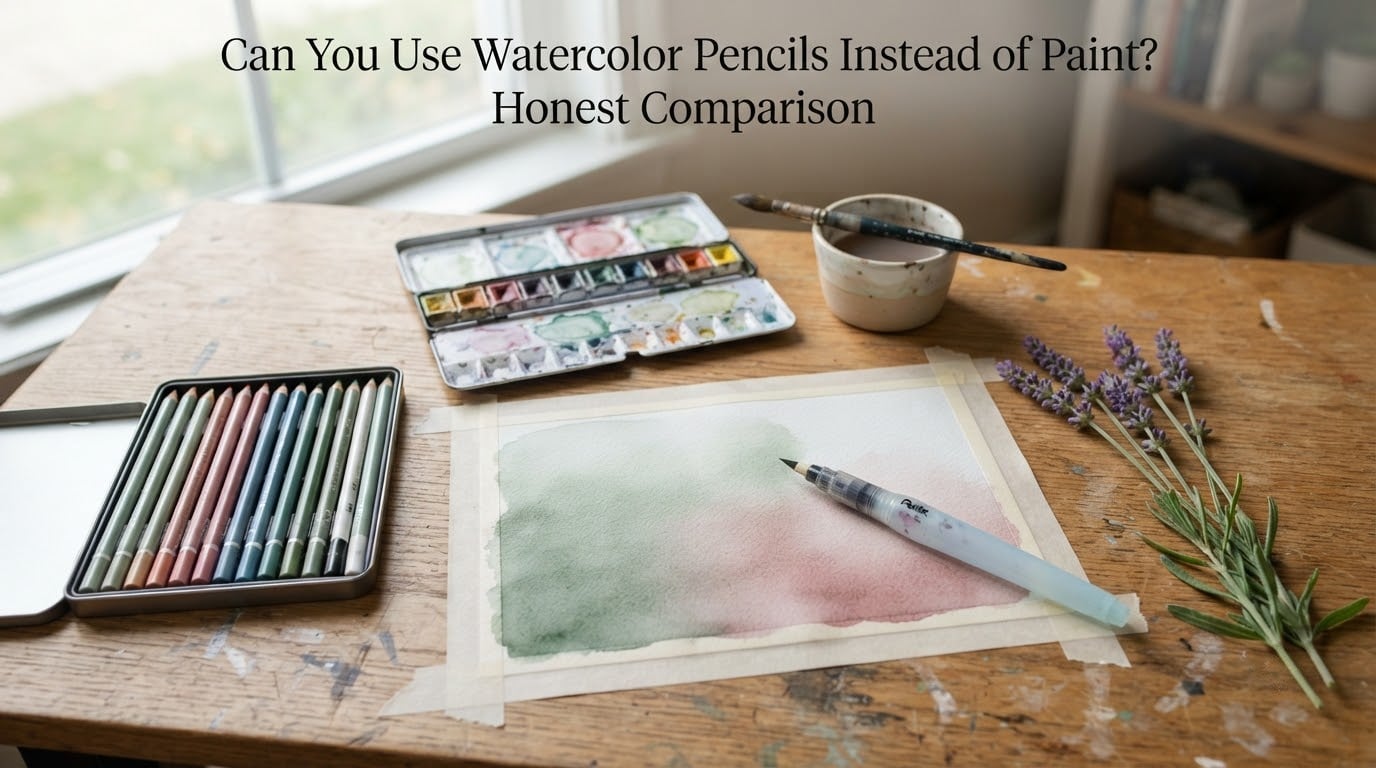
Yes, you can use watercolor pencils instead of paint for many projects, but they are not a perfect substitute. After testing both mediums side by side for weeks, we found that watercolor pencils shine for travel, detail, and sketching, while traditional paint still wins for large washes and core technique learning. This honest comparison of watercolor pencils vs paint breaks down exactly when each medium earns its place in your kit.
I have been switching between pencils and paint for years, and I still reach for both. The question is not which one is better. It is which one fits the work you are doing today. Below, I will walk you through how the two mediums differ, when pencils truly replace paint, and when paint still beats them.
Table of Contents
- Quick Answer: Should You Use Watercolor Pencils Instead of Paint?
- Watercolor Pencils vs Paint: The Key Differences
- How Watercolor Pencils Work (Dry and Wet Techniques)
- When to Use Watercolor Pencils Instead of Paint
- When Watercolor Paint Is the Better Choice
- Watercolor Pencil Techniques for Realistic Results
- Cost, Cleanup, and Long-Term Value
- Choosing the Right Brand for Your Needs
- Frequently Asked Questions
- Final Verdict: Watercolor Pencils vs Paint
Quick Answer: Should You Use Watercolor Pencils Instead of Paint?
Use watercolor pencils instead of paint when you need precision, portability, or quick layering on small formats. Use traditional watercolor paint when you want large washes, smooth gradients, or a forgiving medium to build core skills. Most artists I know end up using both.
At-a-Glance Comparison
| Factor | Watercolor Pencils | Watercolor Paint (Pan/Tube) |
|---|---|---|
| Control and detail | High | Medium |
| Coverage and large washes | Low to medium | High |
| Portability | Excellent | Pan sets good, tubes moderate |
| Learning curve | Medium | Medium to high |
| Cleanup | Minimal | Brushes, water cups, palette |
| Mixed-media friendly | Yes | Possible with care |
That table is the short version. The rest of this guide explains every row in detail, with the real pros and cons I have run into.
Watercolor Pencils vs Paint: The Key Differences
The main difference between watercolor pencils and watercolor paint is how the pigment reaches the paper. Pencils deposit dry pigment through a binder that dissolves when wet, giving you a colored-pencil stroke that can be turned into a wash with a damp brush. Paint arrives already wet and behaves like a liquid from the first stroke.
What Watercolor Pencils Actually Are
Watercolor pencils look and sharpen like regular colored pencils. Inside the wooden barrel, the core uses a water-soluble binder instead of an oil or wax binder. That binder is the trick. Lay down color dry for precise lines, then touch it with a wet brush and the pigment loosens into something close to traditional watercolor.
I describe them to friends as a hybrid tool. You get the control of a pencil with the soft blending of a wash, which is why so many illustrators and journal artists carry them.
What Watercolor Paint Actually Is
Traditional watercolor paint comes in two main forms. Pan paints are dry cakes that you activate with water on a palette. Tube paints are creamy pigment concentrates that you squeeze onto a palette or directly onto wet paper.
Both formats deliver pigment suspended in a water-soluble binder. The medium has been around for centuries and behaves predictably once you learn how water, pigment, and paper interact.
Side-by-Side: Control, Coverage, Mess, and Learning Curve
Control goes to watercolor pencils for fine detail work. A sharp tip can lay hairline strokes that even a fine detail brush struggles to match. Paint, on the other hand, gives you better coverage for filling large areas quickly.
Cleanup is where pencils pull ahead dramatically. You rinse a brush, maybe wipe a pencil sharpener, and you are done. Paint requires water cups, palette washing, and brush care that beginners often underestimate.
The learning curve is steeper for paint because water behaves unpredictably at first. Pencils feel familiar because we have all used colored pencils, which is part of why beginners warm up to them quickly.
How Watercolor Pencils Work (Dry and Wet Techniques)
Watercolor pencils work in two modes: dry for pencil-like precision and wet for paint-like blending. Most artists combine both on the same piece, building dry color first and activating selected areas with water.
Dry Technique
Use the pencil dry exactly like a colored pencil. Press lightly for pale washes of color, press harder for saturated marks, and layer strokes to build depth. This is the easiest entry point and a great way to sketch before painting.
Dry application also lets you draw on the go without a water cup. I have sketched on park benches, planes, and waiting rooms using only a pencil and a small water brush in a separate step.
Wet Technique: Dip vs Brush
You have two main wet approaches. You can dip the pencil tip in water and draw with a wet core, or you can draw dry and brush water over the marks afterward.
Brushing water over dry pigment is the safer method. You control how much water hits the page, you avoid wearing down the pencil tip, and you can rework areas before the pigment lifts. Dipping the tip speeds things up but shortens the pencil faster, especially with softer cores.
When Each Approach Makes Sense
Reach for dry-only work when you want sketching flexibility, when you are away from water, or when you are layering fine lines. Reach for wet work when you want soft transitions, blended skies, or backgrounds that match a watercolor painting.
Reviewers on forums like r/watercolor and r/watercolor101 often warn that wet use on premium pencils wears the tip fast. Use cheaper pencils for heavy wet work and save the expensive ones for dry detail or finishing.
When to Use Watercolor Pencils Instead of Paint
Choose watercolor pencils over paint for travel sketching, detailed illustration, underdrawing, and quick studies. They earn their place in any kit where portability or precision matters more than coverage.
Travel and Field Work
A small set of pencils plus a water brush weighs almost nothing and fits in a coat pocket. Paint kits, even compact pan sets, need room for a water cup and paper towels. For plein air or city sketching, pencils are hard to beat.
Detailed Illustration
If your work involves botanical art, portraits, or any subject with fine lines, pencils give you a level of control that even a size-0 brush cannot match. You can sketch the underdrawing in pencil and add color in the same step.
Underdrawing and Mixed Media
Many painters use watercolor pencils to lay down an underdrawing on a watercolor piece. You map out values and shapes with the pencil, then add paint on top. Because the binder is water-soluble, the pencil marks blend with the paint instead of sitting awkwardly on top.
Quick Studies and Sketching
For 10-to-30-minute studies, pencils are faster than paint. You skip palette setup, you skip water changes, and you can move from one color to the next without rinsing. The result is a quick color study that looks closer to a finished painting than a graphite sketch.
When Watercolor Paint Is the Better Choice
Use watercolor paint for large washes, layered studio work, and core skill building. Paint gives you flow and transparency that pencils cannot match, especially when you need water to do the work for you.
Large Washes and Sky Studies
If you want a graded sky or a soft background that flows edge to edge, paint wins. A wet-on-wet wash with a loaded brush covers a sheet in seconds. Pencils require many strokes to fill the same area, and the texture looks different.
Beginners Building Core Skills
Several experienced artists on Reddit and painters-online.co.uk recommend that beginners start with pans or tubes before investing in pencils. The reason is simple. Paint teaches you how water behaves, and that knowledge transfers directly to pencil wet work.
One experienced user put it this way: use paint to build your foundation and use pencils to draw out your base painting and underdrawing.
Layered Studio Work
For multi-layer studio paintings where you glaze, lift, and rework edges, paint offers more control over transparency and drying time. Pencils are great for the final detail pass but slow for the base layers.
Watercolor Pencil Techniques for Realistic Results
The most realistic watercolor pencil results come from layering dry color, then activating with controlled water, then finishing with sharp dry details. That three-pass rhythm keeps edges crisp and gradients smooth.
Layering Dry, Then Activating
Step one: lay down a light layer of dry color across the area you want to paint. Step two: brush clean water over the layer to dissolve the binder. Step three: add deeper dry strokes on top for darker values, activating only the bits that need to blend.
This rhythm mimics traditional watercolor layering and produces results that look more painted than penciled.
Avoiding Tip Damage
Wet use wears down soft cores fast. To protect your pencils, draw dry whenever possible and use a water brush to add moisture. Keep the tip clean by scribbling on scrap paper before switching colors. Reviewers often note that Inktense and other soft cores degrade faster than harder ones.
Paper Choice Matters
Use watercolor paper, not regular copy paper. Cold-press paper with some texture grabs pigment from the pencil and holds up under wet brushing. Hot-press paper gives you smoother gradients for illustration. Avoid thin paper that buckles or pills the moment water hits it.
Cost, Cleanup, and Long-Term Value
Over a year of regular use, watercolor pencils and pan paint cost about the same for a beginner, but the pencil pencil-by-pencil replacement adds up. Tubes cost more upfront but go further per session. Cleanup time is the hidden cost most beginners underestimate.
Upfront vs Ongoing Cost
A student-grade pan set costs less than a 24-pencil set, and a tube set costs more. Pencils wear down with use, especially under wet work, so you replace them over time. Pans last for years with proper care. Tubes dry out if you forget to recap them.
For someone who paints every day, pans and tubes tend to be more economical over 12 months. For someone who sketches weekly and travels, pencils pay for themselves in convenience.
Cleanup and Mess
Pencils produce almost no mess. A few shavings, a damp brush, and you are done. Paint requires a water cup that needs emptying, a palette that needs wiping, and brushes that need rinsing and reshaping. Multiply that by every session and the mess adds up.
Shelf Life and Storage
Both mediums last for years when stored properly. Keep pencils dry and away from heat, and keep paint pans and tubes closed when not in use. Pencils are easier to store in small spaces, which is another reason traveling artists favor them.
Choosing the Right Brand for Your Needs
Pick a brand based on how you plan to use the pencils. Premium brands reward dry and detail work with rich pigment. Student-grade brands hold up fine for wet work where the pencil will be sacrificed anyway.
Premium vs Student Grade
Premium watercolor pencils from brands like Derwent, Faber-Castell, and Winsor and Newton give you stronger pigment, better lightfastness, and smoother cores. They cost more and they wear down faster when used wet, which is why reviewers on painters-online.co.uk often suggest reserving premium pencils for dry work.
Student-grade pencils cost less and handle wet use without guilt. Use them for studies, layering, and any project where the pencil will be consumed quickly.
What Reviewers Actually Use
On Reddit threads and painters-online.co.uk forums, the most commonly praised brands are Derwent for pigment quality, Faber-Castell Magnus for thicker cores that hold up to vigorous sketching, and Prismacolor for budget-friendly options that work fine for beginners. Derwent Inktense gets mentioned for its staining, almost acrylic-like finish, though reviewers note a steeper learning curve.
Common Beginner Mistakes to Avoid
Tip one: do not use your most expensive pencils on heavy wet work. Tip two: do not draw on regular copy paper, which pills under water. Tip three: do not expect paint-like flow on the first stroke. Pencil washes look slightly textured compared to brush washes, and that is part of their charm.
Frequently Asked Questions
What is the main difference between watercolor pencils and watercolor paint?
Watercolor pencils deposit dry pigment with a water-soluble binder, which you activate with a wet brush for paint-like effects. Watercolor paint arrives wet and behaves like a liquid from the first stroke, giving you faster coverage for large washes.
Do you dip watercolor pencils in water?
You can dip the tip in water for fast, saturated strokes, but most artists draw dry and brush water over the marks afterward. Drawing dry protects the pencil tip and gives you more control over how much water hits the paper.
Can watercolor pencils fully replace paint?
They can replace paint for sketching, detail work, travel, and small studies, but they do not match paint for large washes, smooth gradients, or wet-on-wet techniques. Most artists keep both in their kit.
Are watercolor pencils good for beginners?
Yes, especially for artists who already feel comfortable with colored pencils. They are forgiving on small formats and require less setup than paint, which lowers the barrier to starting. For learning core watercolor skills like wet-on-wet flow, paint is still the better teacher.
What paper should I use with watercolor pencils?
Use watercolor paper rated for wet media, ideally 140 lb cold-press or hot-press. Cold-press paper adds texture to your strokes. Hot-press paper gives smoother gradients for illustration. Avoid regular copy paper, which pills and buckles when wet.
Do watercolor pencils work on regular paper?
They work dry on regular paper, but the moment you add water the paper will buckle, pill, or tear. For wet techniques, always use paper designed for watercolor.
Final Verdict: Watercolor Pencils vs Paint
Watercolor pencils vs paint is not an either-or choice. Use watercolor pencils for travel, detail, and quick studies where precision and portability matter. Use watercolor paint for large washes, layered studio work, and learning how water behaves on paper. Our team keeps both on the desk, and that combination has served every project we have tackled in 2026.
If you can only buy one to start, decide based on your first project. Buying your first sketchbook and water brush for plein air? Start with a small set of student-grade pencils. Filling a sketchbook with botanical studies? A pan set teaches you faster. Either way, the other medium is a natural next step.