
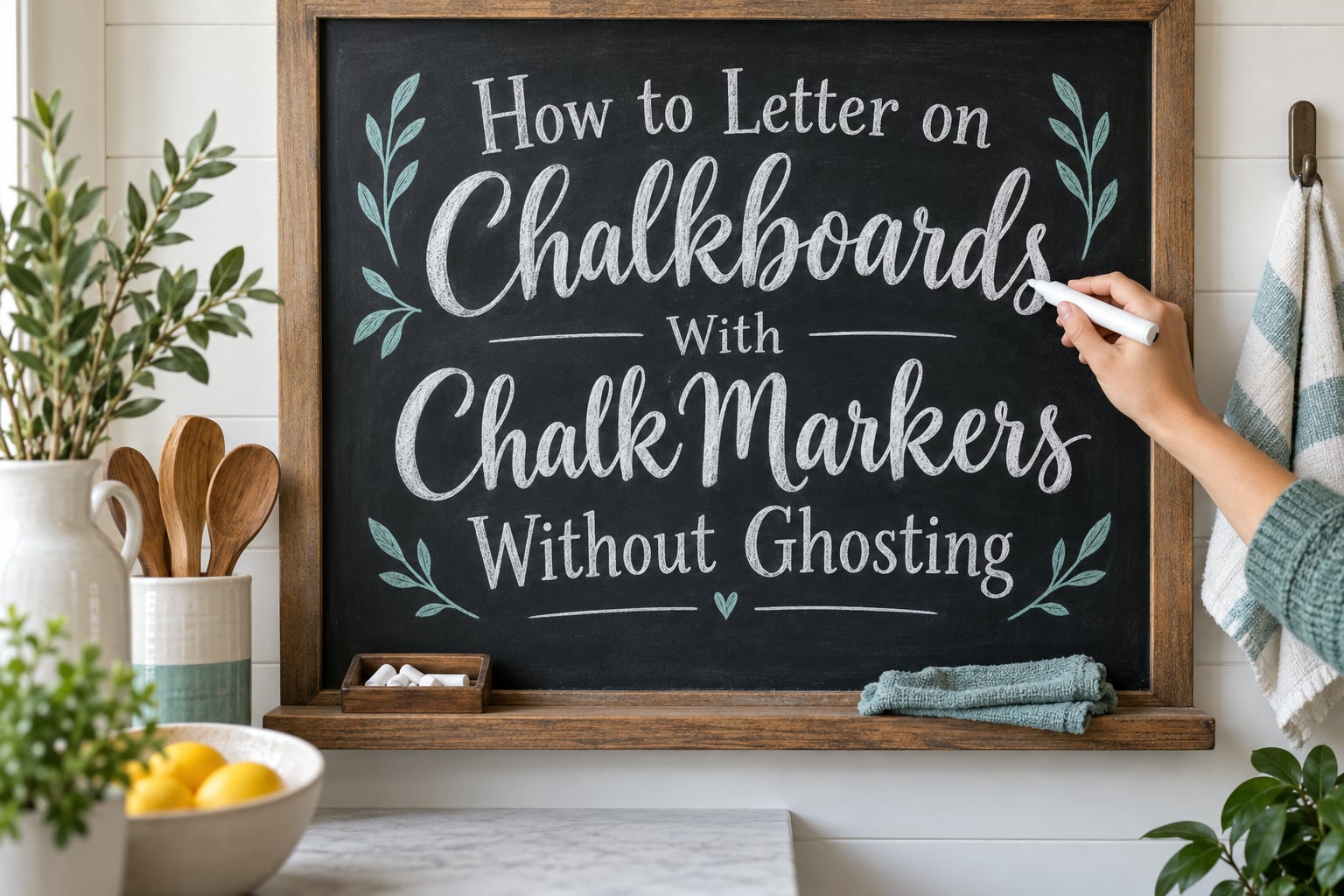
Ghosting is the faint haze a liquid chalk marker leaves behind after you wipe the lettering away. The ink settled into the tiny pores of the board instead of sitting on top of it, so no amount of scrubbing makes the surface look new again.
The good news is that ghosting is almost entirely a preparation problem, and it has a sixty-second fix. Season the board with dry traditional chalk, letter with light even pressure, let the ink dry fully before you touch it, then wipe with a damp microfiber cloth rather than a dry eraser. That four-beat method is what keeps lettering on a slate, MDF, or chalk-painted surface looking crisp for 2026 and beyond.
I broke this guide into the parts most tutorials skip: the actual lettering technique, a board-by-board breakdown of where ghosting risk lives, and a table of cleaners with exact dilutions and dwell times. Whether you are lettering a kitchen menu board, a wedding sign, a classroom display, or a coffee shop board, the fix is the same, and it costs almost nothing.
Table of Contents
- What Chalk Marker Ghosting Is and Why It Happens
- Board Types: Slate, MDF, Painted Wall, and Glass
- How to Season a Chalkboard Before You Letter
- How to Letter on a Chalkboard With Chalk Markers Without Ghosting
- Print vs Script Lettering for Beginners
- How to Remove Existing Ghosting
- When a Board Is Permanently Ghosted
- How to Preserve a Finished Lettered Sign
- How to Fix Dried-Out Liquid Chalk Markers
- Maintenance Routine: Re-Season After Every Wet Clean
- Tools and Supplies Checklist
- Common Mistakes That Cause Permanent Ghosting
- Frequently Asked Questions
- How do you remove ghosting from a chalkboard?
- Can you write on a chalkboard with chalk markers?
- Why won’t my chalk write on my chalkboard?
- How long should you wait before erasing chalk marker?
- How do you clean liquid chalk markers off a chalkboard?
- Does rubbing alcohol remove chalk marker?
- Do liquid chalk markers wash off?
- How do you fix dried out liquid chalk markers?
- How do you preserve a finished chalkboard sign?
- What is the best way to clean a painted chalkboard wall?
- Conclusion
What Chalk Marker Ghosting Is and Why It Happens
Liquid chalk marker ink is a water-based dye suspended in a semi-permanent pigment. When the nib touches an untreated board, the water in the ink wets the surface and carries pigment down into the pores. Once there, the pigment anchors and behaves more like a stain than a coat of paint.
Porosity is the whole story. Slate and MDF are porous by nature. A chalk-painted wall is porous at the micro level even when it looks smooth. Glass and sealed acrylic are non-porous, which is why marker ink on a window wipes away in seconds while the same ink on a framed slate board can haze permanently.
Two habits make ghosting much worse. The first is erasing with a dry board eraser while the ink is still slightly damp, which grinds the pigment deeper into the surface instead of lifting it. The second is skipping the seasoning step, so the marker has open pores to soak into from the very first letter.
Board Types: Slate, MDF, Painted Wall, and Glass
Before you can fix ghosting, you need to know what you are wiping. The four common board surfaces behave very differently, and the wrong cleaner on the wrong one can strip paint or dull a sealer. Here is how each one responds to liquid chalk markers.
| Board type | Porosity | Ghosting risk | Best prep method |
|---|---|---|---|
| Natural slate | Porous, pitted at a micro level | Medium to high | Season with the side of white chalk, twice |
| MDF or wood-framed | Highly porous if unsealed | High | Season, then consider a clear matte sealer |
| Chalk-painted wall | Micro-porous, matte | Medium | Two thin chalk coats, re-season every few weeks |
| Glass or sealed acrylic | Non-porous | Low | No seasoning needed, damp cloth only |
Run a quick diagnostic before you buy any cleaner. Write a small letter in a corner, wait 24 hours, then press a damp paper towel against it. If the pigment comes off on the towel, the ink is sitting on the surface and a damp wipe will clear it. If the letter fades but leaves a grey shadow in the board, that shadow is pigment inside the pores, and it needs a dwell-time treatment or a sealer.
A chalkboard wall needs different care than a framed slate board. A painted wall is a large surface with no frame edge to hide wear, so residue shows up more, and homeowners often plan on recoating the paint roughly every six months under heavy use. A framed board is small, and you can re-season it in two minutes.
How to Season a Chalkboard Before You Letter
Seasoning, also called priming, means filling the surface pores with a layer of dry traditional chalk that the marker cannot bond to. It takes about five minutes and it is the single cheapest fix in this whole guide. Skip it and every other step becomes harder.
- Clean the surface first. Wipe the board with a damp cloth to clear dust, old chalk dust, and any existing film. Let it dry fully before you go on.
- Rub the side of white chalk across it. Use the flat side, not the tip, and work up-and-down in long strokes first, then side-to-side, until the whole area looks hazy white. The side covers more surface per pass and lays down more pigment.
- Wipe it back with a dry cloth or board eraser. Most of the white comes off. What you want to see is a faint even grey cast, not a blank board.
- Test before you letter. Draw a small letter, wait 60 seconds, then wipe with a damp microfiber cloth. If a shadow remains, season that area a second time and retest.
Seasoning works because it trades open pores for a thin chalk layer. Marker pigment sits on top of that layer rather than in the board, so a damp wipe lifts chalk and ink together. Homeowners commonly season a new board with a piece of cheap sidewalk chalk before first use for exactly this reason.
Season a chalk-painted wall with extra care. Use a light hand, because a heavy pass can leave a patchy white film that shows through thin marker strokes. Two thin coats beat one heavy one.
How to Letter on a Chalkboard With Chalk Markers Without Ghosting
This is the process. Most ghosting complaints trace back to one of the seven steps below being skipped, usually the drying step or the wipe step. Work through them in order the first time you letter a board, then use the same rhythm every time.
- Start with a freshly seasoned board. Pores filled, surface wiped, no film. A new board needs this step even if it looks clean out of the box.
- Choose the right nib. A medium or broad nib lays down more pigment and more water than an extra-fine tip. For lettering on a porous surface, start one size finer than you think you need. A broad tip on a porous board is where streaks come from.
- Hold the nib at a shallow angle. Keep the tip close to flat against the board rather than tilted upright. A vertical nib presses the ink into the surface instead of laying it on top.
- Use light, even pressure. Let the nib glide. Pressing harder does not make the color bolder, it just pushes more water into the pores, and that water is what carries the pigment in.
- Use thin layers and correct stroke order. For print lettering, pull the stroke in one direction and lift. For script, build up letters in the order the hand writes them, front to back, so your hand and the marker body do not drag across finished strokes and smear them.
- Wait a full 60 seconds before erasing. This is the step nobody skips and everybody needs. Ink that is still damp will smear under a dry eraser and turn into a haze that is harder to remove than the original letters. If you can, give it a couple of minutes in a cool room.
- Wipe with a damp microfiber cloth. Not a dry eraser, not a dry paper towel. Dampen a microfiber cloth with plain water, wring it out well, and wipe in one direction. The water lifts the chalk and the ink together.
That is the entire method. Seasoned board, fine nib, shallow angle, light pressure, one direction per stroke, 60 seconds of drying, damp cloth to erase. Every one of those steps exists to keep water out of the pores or to lift the ink out whole.
Shake the marker before you cap it, and write a small test letter on a scrap of the same board each time you open a new marker. Pigment quality varies between brands, and a thin, watery marker will ghost far more than an opaque one, which is one of the reasons chalk ink makers talk about pigment load and ink flow so much.
Print vs Script Lettering for Beginners
If you are new to chalk lettering, start with print. Straight strokes and separate letter parts mean you lift the nib constantly, which keeps the ink on the surface instead of dragging it.
Script is harder for one specific reason: connected strokes stay wet longer. A long unbroken word is a wet line by definition, so give extra drying time before you wipe script, and use an extra-fine tip for flourishes and underlines where the pigment load is heaviest.
How to Remove Existing Ghosting
Work from mild to strong. The gentlest thing that lifts the haze is the right choice, because every stronger cleaner you escalate to is also closer to the thing that can damage a painted or sealed surface.
| Cleaner | Best surface | Mix ratio | Dwell time | Caution |
|---|---|---|---|---|
| Damp microfiber cloth | All, for fresh ink | Water only, wrung out | Wipe immediately after 60 sec dry | Not strong enough for set ink |
| Water and white vinegar | Slate, MDF, painted wall | 4 parts water to 1 part vinegar | 5 to 7 minutes | Test on painted surfaces first, re-season after |
| Magic Eraser (melamine foam) | Slate, sealed board | Ready to use, dampened | 30 to 60 seconds, light pressure | Abrasive, will dull a matte sealer with heavy use |
| Isopropyl alcohol | Slate, glass, sealed MDF | 1:1 with distilled water | 1 to 2 minutes | Use less alcohol on chalkboards, never on fresh paint |
| Glass cleaner | Glass, acrylic, sealed boards | Ready to use | 1 minute | Residue needs a second damp pass |
| Mild dish soap and water | Painted wall, sealed board | 1 tsp per cup of water | 3 to 5 minutes | Rinse with a second clean damp cloth |
| Ammonia-based cleaner | Glass, sealed non-porous | Ready to use, diluted if strong | 1 minute | Not for painted walls, ventilate the room |
To apply any of these, dampen a microfiber cloth rather than spraying the board directly. Liquid sprayed onto a seam or a frame can travel into wood and cause swelling, and a cloth keeps the liquid exactly where you are working. After the dwell time, wipe in one direction with a clean section of cloth, then follow with a plain damp pass to remove the cleaner itself.
On a uksignboards.com forum thread, sign writers note that window cleaner is a common first-line fix for marker residue in the UK trade, and the same habit works here for sealed boards. The same thread flags that Pentel Wet Erase chalk markers ghost more than people expect, which tracks with how the wet-erase formula behaves on porous slate.
Always finish by re-seasoning. A vinegar or alcohol clean strips the protective chalk layer that made future lettering wipe clean, so the board goes straight back to being porous until you prime it again.
When a Board Is Permanently Ghosted
Some residue is not coming out, and pretending otherwise wastes a weekend. A light even haze that fades with a damp wipe is normal wear and clears with the table above. Streaks that stay after a full vinegar dwell usually mean the marker sat wet too long on one spot.
A dark shadow that does not move at all is pigment that has set in the pores. If you have tried the 4:1 vinegar mix with a full 5 to 7 minute dwell and the shadow survives, the honest options are to paint over the area with chalkboard paint, mask the section, or replace the board. A clear matte sealer also works on MDF and wood, though it changes the look of the surface permanently.
A r/crafts poster learned this the hard way with Bistro chalk markers used on a wall that was assumed to be wipe-clean. If you have ever used permanent or wet-erase ink on a chalkboard, assume the stain is permanent and go straight to the paint-over plan.
How to Preserve a Finished Lettered Sign
The most reliable way to keep a finished piece is to photograph it before you erase, and there is no substitute for that. Use a phone camera in even daylight, take two shots, and you have a record you can reprint or frame.
For the physical piece, a matte clear fixative sprayed from about 10 inches away will lock thin marker lettering in place. Work outdoors, use light coats, and test on an offcut first because sealers can shift the color from matte to a slight gloss. On glass, a second coat of chalkboard paint is more durable than any spray.
Some sign writers run a very thin coat of car wax over a dry-erase style board and let it dry, which leaves a smoother surface that resists marker ghosting. That trick comes from dry-erase boards rather than traditional slate, so test it on a small area first.
How to Fix Dried-Out Liquid Chalk Markers
A dried-out marker produces thin, streaky, uneven lines that smear and read as ghosting even on a perfectly seasoned board. A streaky line is a marker problem, not a board problem, so check the marker before you re-season anything.
- Remove the cap and pump the nib. With the tip pointing down, press it gently against a scrap of paper several times to draw the ink back toward the nib.
- Warm it. Hold the body in your hands or rest it briefly in a warm spot. Warming thins the ink so it flows again.
- Test on paper first. Write a quick S on scrap paper. If the line is solid, the marker is recovered.
- Seal it back up. Cap the marker tightly and store it horizontally so the nib stays saturated. A loose cap is how markers dry out in the first place.
If a marker has been open and dried solid for months, it may never recover. Retire it and keep it out of the tray, because a streaky marker in the tray is the one people grab by mistake, and its residue is much harder to remove than clean lettering.
Maintenance Routine: Re-Season After Every Wet Clean
The cadence is simple. Any time you use a damp cloth, a vinegar mix, alcohol, or a Magic Eraser, re-season the board before the next lettering session. Two minutes of chalk and a dry wipe restores the layer that keeps the ink on the surface.
For routine dry erasing, use a proper board eraser and keep it clean. A felt eraser that has turned to felt and ink turns a light wipe into a scrub, and scrubbing is what drives pigment in. Replace it when it stops shedding dust cleanly.
Never use a dry-erase or magnetic eraser on marker ink. Those erasers are designed to polish a surface, which grinds semi-permanent pigment deeper. On a forum thread about keeping a chalkboard clean, the simplest advice was to keep permanent and dry-erase markers physically separate in the board tray, which prevents half of these problems before they start.
Wipe a dusty board with a dry cloth first, then dampen it. Dust plus water turns into a paste, and pasting pigment into a surface is the fastest route to a permanent haze.
Tools and Supplies Checklist
None of this needs a large kit. The whole routine fits in a small tray.
- A damp microfiber cloth for wiping and cleaning
- A Magic Eraser or melamine foam for stubborn haze on sealed boards
- White vinegar for diluting with water
- Isopropyl alcohol, diluted 1:1, for slate and glass
- A box of cheap white chalk for seasoning
- A proper board eraser, kept clean
- Glass cleaner and mild dish soap for glass and painted surfaces
- Extra-fine and medium chalk marker nibs
Common Mistakes That Cause Permanent Ghosting
- Lettering on an unseasoned board. The first layer of ink on a new board always ghosts more than the tenth. Season first.
- Erasing while the ink is still damp. A 60 second wait is not optional. Damp ink plus a dry eraser equals a permanent haze.
- Using a dry eraser or paper towel. You need a damp cloth, otherwise you are grinding pigment in rather than lifting it out.
- Using the wrong marker. Permanent and wet-erase ink on a chalkboard is a stain, not a cleaning problem. Keep these pens away from the board tray.
- Pressing hard with a broad nib. Pressure and heavy tips push water into the pores. Go finer and go lighter.
- Cleaning a painted wall with alcohol or ammonia. Both can lift or dull chalkboard paint. Use the diluted vinegar mix and test a corner first.
Frequently Asked Questions
How do you remove ghosting from a chalkboard?
Start with the gentlest cleaner that works: a damp microfiber cloth for fresh ink, then a 4:1 water-to-vinegar mix left on for 5 to 7 minutes, then a 1:1 isopropyl alcohol dilution for set residue on slate or glass. Wipe in one direction and follow with a plain damp pass. Re-season the board with white chalk when you are done, because cleaning strips the layer that stops future ink sinking in.
Can you write on a chalkboard with chalk markers?
Yes, on any seasoned board. Slate, MDF, and chalk-painted walls all work well once they are primed with dry traditional chalk, because the chalk fills the pores the marker ink would otherwise sink into. Unseasoned boards are where liquid chalk marker disappoints people, leaving a haze after the first wipe. Glass and sealed acrylic need no seasoning at all.
Why won’t my chalk write on my chalkboard?
Usually the board still has a slick sealer, grease, or a film of marker residue on it, so the chalk slides off instead of gripping. Wash it with the diluted vinegar mix, dry it fully, and season it. The paper towel test tells you which problem you have: if a 24 hour old letter wipes off on the towel, the ink is on the surface. If it leaves a grey shadow, that is pigment inside the pores.
How long should you wait before erasing chalk marker?
Wait a full 60 seconds, and two minutes in a cool room is better. Ink that is still damp smears under a dry eraser, and the smear sets into the pores faster than the original letter would have. The drying time is the step most people skip, and it is the difference between a clean wipe and a haze you spend an afternoon removing.
How do you clean liquid chalk markers off a chalkboard?
Dampen a microfiber cloth rather than spraying the board, so liquid never travels into a frame seam. For recent ink, a damp cloth after the 60 second dry is enough. For set residue use a 4:1 water-to-vinegar mix and leave it 5 to 7 minutes, or a 1:1 isopropyl alcohol dilution on slate and glass. Finish with a clean damp pass and re-season before lettering again.
Does rubbing alcohol remove chalk marker?
Yes, and it is the strongest option in the table. Dilute isopropyl alcohol 1:1 with distilled water and leave it on slate, glass, or sealed MDF for 1 to 2 minutes. Use less alcohol on chalkboards than you would on glass, since the solvent can dull a matte sealer with repeated use. Never apply alcohol to a freshly painted chalkboard wall.
Do liquid chalk markers wash off?
They are semi-permanent, not permanent, which is why they wipe off a seasoned board and fail on a porous or stained one. If the ink soaked into open pores on the first pass, water will not dislodge it. A test letter left for 24 hours answers the question: removable on the towel means fine, a shadow left behind means the ink is in the board and needs a dwell-time cleaner or a sealer.
How do you fix dried out liquid chalk markers?
Point the nib down and press it against scrap paper several times to pump ink back toward the tip, then warm the body in your hands so the ink thins. Test on paper before touching the board. Cap it tightly and store it horizontally. A marker dried solid for months often does not recover, and a streaky marker should leave the tray because its thin uneven lines smear and read as ghosting.
How do you preserve a finished chalkboard sign?
Photograph it first, in even daylight, before you erase anything. For the physical piece, a matte clear fixative sprayed from about 10 inches away locks thin lettering in place, though it can shift matte to a slight gloss, so test on an offcut. On glass, a second coat of chalkboard paint is more durable than a spray. Work outdoors with the fixative.
What is the best way to clean a painted chalkboard wall?
Mild dish soap and warm water, left on for 3 to 5 minutes and rinsed with a second clean damp cloth. Avoid alcohol and ammonia on painted walls, since both can lift or dull the chalkboard finish. Avoid a Magic Eraser too, because the foam is abrasive on a matte painted surface. Re-season the wall with a light pass of white chalk afterwards, and plan on recoating heavy-use walls roughly every six months.
Conclusion
How to letter on a chalkboard with chalk markers without ghosting comes down to four beats: season the board with the side of dry chalk, letter with a fine nib at a shallow angle and light pressure, let the ink dry for a full 60 seconds, and wipe with a damp microfiber cloth instead of a dry eraser. That sequence keeps the marker pigment on the surface of the board rather than inside its pores.
Start today by seasoning whichever board you use most and leaving one test letter on it for 24 hours. The paper towel test takes a minute and tells you whether the problem is surface ink or a stain in the board, which decides everything about how you clean next. If the shadow will not lift after a full vinegar dwell, paint over it rather than fighting it, and re-season the fresh coat before you letter again.